
Florida Lawn Care Mistakes and Fixes for a Pest-Resistant, Healthy Lawn
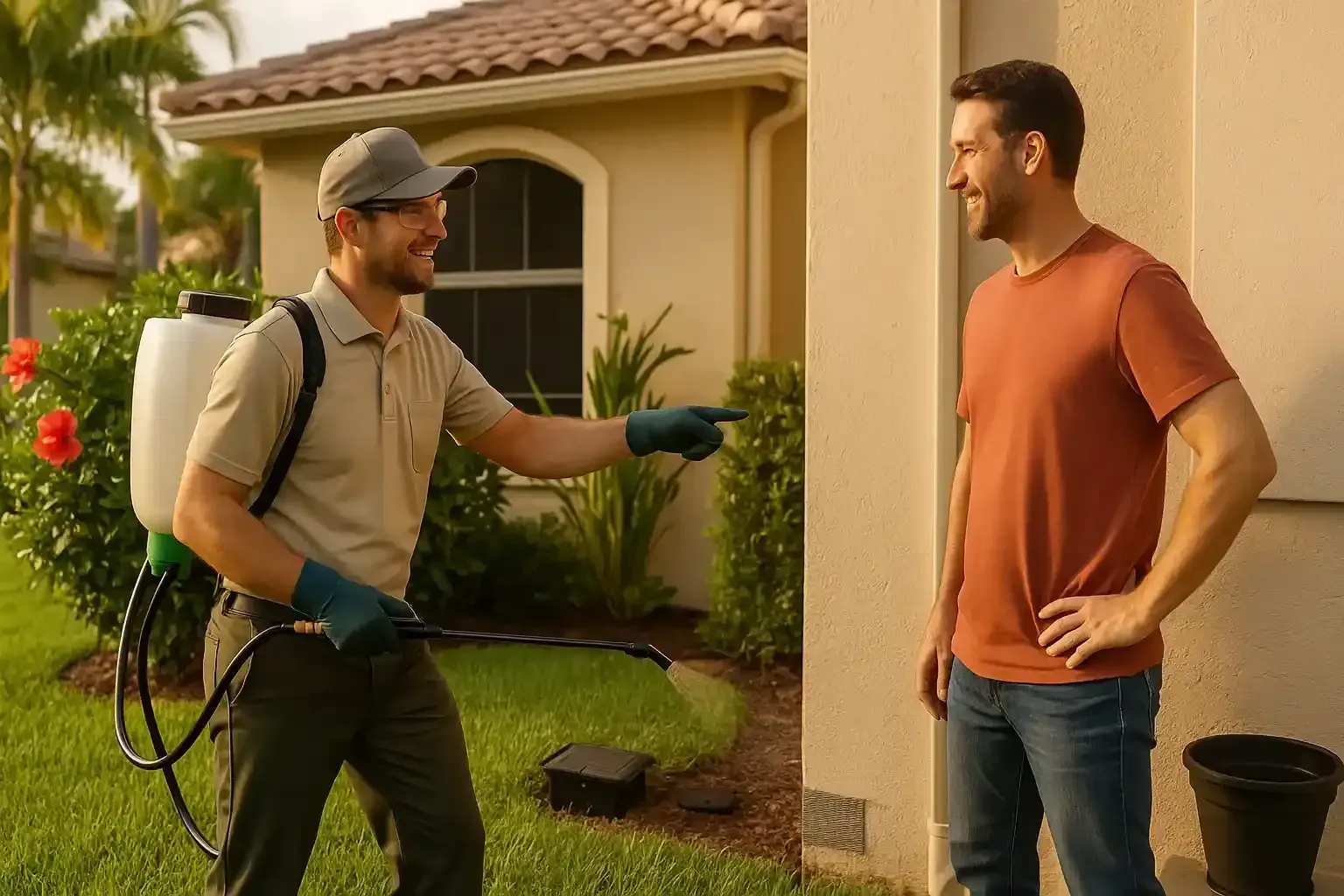
Kevin Blanks • February 25, 2026
Florida Lawn Care Mistakes: A Wednesday Fix-It Guide for a Healthier, Pest‑Smart Lawn
Florida Lawn Care Mistakes are easy to make—and expensive to ignore. Our heat, humidity, sandy soils, and sudden storms punish turf and create perfect conditions for pests when the basics slip. At Superior Spray, we connect lawn health with whole‑home pest prevention so your yard looks great and your living spaces stay comfortable. If you’re using Wednesday as a midweek reset, this guide shows the Florida Lawn Care Mistakes to fix first—plus how our lawn spraying, shrub tree care, moss spraying, and tree injections work alongside precise pest control to keep cockroaches, rodents (rats and mice), and termites from gaining ground.
Why lawn mistakes invite indoor pests
In Florida, overly wet edges, dense plantings against siding, and weak turf don’t just hurt curb appeal—they build bridges and harborage for pests. Large “palmetto bug” cockroaches thrive along shaded, damp foundations. Roof rats ride tree limbs and dense shrubs to rooflines. Termites follow moisture and concealed access at slab edges and piers. We design fixes using Integrated Pest Management (IPM)—inspect, identify, reduce food/water/shelter, and treat precisely. The EPA’s plain‑language IPM primer mirrors our approach and is worth a read: EPA: IPM Principles.
The top Florida Lawn Care Mistakes (and fast Wednesday fixes)
- Scalping St. Augustinegrass — Cutting too low stresses turf, invites weeds, and raises chinch bug risk. Most St. Augustine lawns perform best around 3–4 inches; many Zoysia cultivars at 2–3 inches; Bahiagrass near 3–4 inches. UF/IFAS offers species specifics: UF/IFAS: St. Augustinegrass. Quick fix: Raise the deck and never remove more than one‑third of the blade at a time.
- Watering at night (or every day) — Constant leaf wetness fuels disease and soggy edges where pests shelter; nightly irrigation does the same. Florida‑Friendly Landscaping recommends early‑morning watering to moisten the root zone (often 0.5–0.75 inches per cycle) with dry‑down between runs: FFL: Water Efficiently. Quick fix: Shift to dawn cycles and use cycle‑and‑soak for sandy or compacted soils.
- Ignoring rain sensors and coverage — Stuck controllers and tilted or clogged heads create perpetual wet spots along foundations—prime real estate for roaches and termites. Quick fix: Test the rain sensor, level or replace faulty heads, and eliminate overspray on slabs and walls.
- Mulch too deep or touching the slab — Thick, damp mulch against siding keeps foundations wet and conceals termite tubes. Quick fix: Maintain ~2 inches of mulch and pull it a few inches off the slab; never bury weep holes or siding.
- Plants pressed against siding and rooflines — Dense shrubs trap humidity, slow dry‑down, and create runways for rats and mice. Quick fix: Lift and thin plantings to restore airflow; keep greenery off walls and eaves. Our shrub tree care program is built for this exact perimeter tune‑up.
- Fertilizing at the wrong time or with the wrong product — Surge growth stresses turf and leaches nutrients; some communities have seasonal rules. The state’s Urban Turf Fertilizer Rule is a good baseline: Florida DEP: Urban Turf Fertilizer Rule. Quick fix: Favor slow‑release nitrogen and balanced potassium at compliant times; feed to your turf and soil—not a calendar.
- Skipping chinch bug and caterpillar scouting — Southern chinch bug damage in St. Augustinegrass often looks like drought in sunny patches. Armyworms and sod webworms chew blades quickly. UF/IFAS pinpoints what to watch: UF/IFAS: Southern Chinch Bug. Quick fix: If “drought” patches don’t respond to watering—or if leaf tips look chewed—call us for precise diagnosis and targeted lawn spraying.
- Letting gutters clog and downspouts dump at the slab — Overflow and slab‑soaking raise humidity, encourage termites, and fuel big roach activity in valve boxes. Quick fix: Clean gutters, add extensions, and direct water away from the foundation.
- Thatch and compaction left to build — Thatched or compacted turf sheds water and harbors disease. Quick fix: Schedule core aeration or selective dethatching when turf is actively growing; consider light, compatible topdressing to improve surface and microbial activity.
- Storing “food” for pests outdoors — Fruit drop, open compost, bird seed, and pet food bring rats and roaches to the party. Quick fix: Remove fruit daily, relocate or secure compost, and store seed and pet food in sealed bins. If signs of activity appear, we integrate rodent exclusion—screening vents, sealing utility lines, and installing door sweeps—so rats and mice hit a wall.
How we connect lawn care to whole‑home protection
Florida Lawn Care Mistakes ripple into kitchens, garages, attics, and crawlspaces. That’s why we build one connected plan. Outside, we target weeds, disease, and insects with precise lawn spraying timed to life cycles—no blanket overspray. We pair that with shrub tree care to thin pest‑friendly density along the structure, moss spraying to improve light and dry‑down in shaded pockets, and tree injections to strengthen canopies from the inside out. Healthier plants and drier edges reduce harborage and bridges to your doors and rooflines.
Indoors, we deliver targeted pest control for everyday intruders—precision baits and crack‑and‑crevice work for cockroaches instead of broad interior spraying. We protect structures with termite inspections and species‑matched strategies, and we harden the shell with true rodent exclusion so rats and mice can’t get back in. If travel ever introduces bed bugs, we handle that with a specialized, step‑by‑step program that won’t conflict with your lawn or perimeter plan.
Your Wednesday workflow: simple moves that compound
Midweek is perfect for course corrections. Walk the perimeter after your sprinklers run at dawn. If your shoes squish along the slab, cut runtimes or pivot to cycle‑and‑soak. Check mulch depth and pull it back from the foundation. Lift and thin any shrubs touching siding and rooflines so walls dry by afternoon. Inside, dry kitchen and bath sinks overnight, seal utility penetrations you can reach, and swap cardboard for lidded plastic bins in the garage. These small, repeatable moves reinforce professional treatments and turn seasonal spikes into manageable blips.
Science‑backed sources we use (and you can trust)
If you enjoy the “why” behind the what, Florida’s extension and conservation resources are excellent companions to our service. For mowing heights and turf ID, see UF/IFAS’s St. Augustinegrass guide linked above. For irrigation that fits our climate, the Florida‑Friendly Landscaping program’s watering guidance is practical and local: FFL: Water Efficiently. For timing and product compliance, the DEP’s Urban Turf Fertilizer Rule offers statewide context: Florida DEP: Urban Turf Fertilizer Rule. And if you like seeing how we prioritize inspection and targeted action, the EPA’s IPM overview lays out the same framework we use at your home.
Why homeowners choose Superior Spray
We’re Florida‑first and results‑focused. Our team blends agronomy, irrigation know‑how, and whole‑home pest prevention to turn Florida Lawn Care Mistakes into fast wins that last. One plan, one accountable team, inside and out: lawn spraying to stop turf problems precisely; shrub tree care, moss spraying, and tree injections to dry and strengthen the perimeter; targeted pest control for cockroaches; termite strategies tuned to species and structure; and rodent exclusion that keeps rats and mice from returning. And yes—if you’ve been up late searching “pest contro” after an unwelcome sighting, we’ll make your next step simple.
Stronger lawn, calmer home
Fixing a few Florida Lawn Care Mistakes—mowing height, smarter watering, cleaner edges, better airflow—pays off twice: greener turf outside and fewer pests testing your thresholds. At Superior Spray, we connect the dots with science‑backed lawn care and an indoor program that respects your family and pets. Ready to turn this Wednesday into the week your lawn turns the corner—and your home gets ahead of pests? We’re here with a plan that fits your property and budget.
If you’re exploring home health care options, let’s talk about what support looks like for your situation. Call 863-682-0700
Request Service
Request a Free Estimate
Fill out the form below. This form will take less than a minute to complete.
* indicates required fields