
Effective Tuesday Rodent Control Strategies for Florida Homes
Kevin Blanks • February 24, 2026
Signs of Rats in Florida Homes: A Tuesday 24‑Hour Response Plan That Actually Works
If you woke up to scratching in the attic or found droppings in the garage, you’re already noticing Signs of Rats in Florida Homes—and Tuesday is the perfect day to take back control. At Superior Spray, we move fast with species ID, sealing and screening (rodent exclusion), strategic trapping, and practical pest prevention so rats and mice can’t replace the ones we remove. In this guide, we break down what those early clues mean, how to respond in the first 24 hours, and how we connect indoor results to exterior care for protection that holds through Florida’s heat, humidity, and storm season.
Why Florida homes see rat activity year‑round
Warm temperatures, dense vegetation, and frequent rain create ideal conditions for rodents. Roof rats—common across Florida—use tree limbs, fences, and utility lines to reach soffits and attic vents. Norway rats favor ground‑level harborage and burrows, while house mice exploit dime‑size gaps near doors, garages, and utility penetrations. When food, moisture, and cover line up, it’s only a matter of time before those Signs of Rats in Florida Homes start popping up: noises after dark, gnaw marks, rub trails, and droppings along edges and in storage zones.
Know the clues: what real‑world evidence looks like
The most common Signs of Rats in Florida Homes show up in predictable places. In attics, you might hear movement overhead or find tunneling paths through insulation. In garages and pantries, watch for gnawing on bins and packaging; look along baseboards for grease rubs where rodents hug walls. Droppings differ by species (larger for rats, smaller and pointed for mice) but always tell a story about travel routes and feeding spots. Outdoors, roofline gaps, torn soffit screens, and branches touching the house often explain how activity started.
Health and property risks you shouldn’t ignore
Rats contaminate surfaces and food, and their urine and droppings can spread pathogens. In warm, wet climates, leptospirosis is a concern—learn more from the CDC: CDC: Leptospirosis, and Florida’s context here: Florida Health: Leptospirosis. Beyond health, rodents chew wiring (a fire hazard), damage insulation, and can undermine pest prevention efforts by spreading food residues and nesting where moisture lingers. If you’re seeing Signs of Rats in Florida Homes, speed and accuracy matter.
Why DIY alone struggles—and what really works
Traps and baits can knock down numbers, but without sealing entry points and removing attractants, new rodents will replace the ones you catch. The most reliable results follow Integrated Pest Management (IPM): inspect, identify, correct conditions, apply targeted control, and verify. For a plain‑language primer that mirrors our approach, see the EPA’s overview: EPA: IPM Principles. Our process at Superior Spray prioritizes rodent exclusion first—screening vents, sealing utility lines, repairing soffit and fascia, and installing door sweeps—so trapping finishes the job instead of chasing sightings for weeks.
Your 24‑hour Tuesday checklist: turn clues into control
- Break the bridges: Trim limbs and vines away from the roofline; clear gutters and redirect downspouts so eaves and fascia dry quickly after rain.
- Harden the shell: Install door sweeps where daylight shows; screen attic/gable vents with chew‑resistant mesh; seal gaps at pipes, cables, and AC lines; repair soffit/fascia damage.
- Starve the scouts: Store pantry and pet foods in airtight containers; empty pet bowls overnight; keep indoor trash in lidded bins and move outdoor bins a few feet off the slab.
- Dry it out: Fix slow leaks, insulate sweating pipes, and run bath/kitchen fans; reduce attic humidity with proper ventilation—drier spaces discourage nesting.
- Declutter smartly: Swap cardboard for lidded plastic bins in garages and attics; elevate storage to reduce harborage and protect belongings.
- Place traps with purpose: Set along edges, beams, and rub‑marked runways—not randomly. Avoid relying on baits until exclusion is underway to prevent drawing new rodents.
- Log patterns: Note where you hear movement, see droppings, or find gnawing; these patterns help us accelerate results during inspection.
- Clean safely: Avoid sweeping or vacuuming dry droppings that can aerosolize dust. Use wet cleaning methods per CDC guidance: CDC: Cleaning Up After Rodents.
- Call Superior Spray: We’ll verify the Signs of Rats in Florida Homes you’re seeing, seal the structure, set a strategic control plan, and confirm the fix holds.
Our inspection and rodent exclusion plan
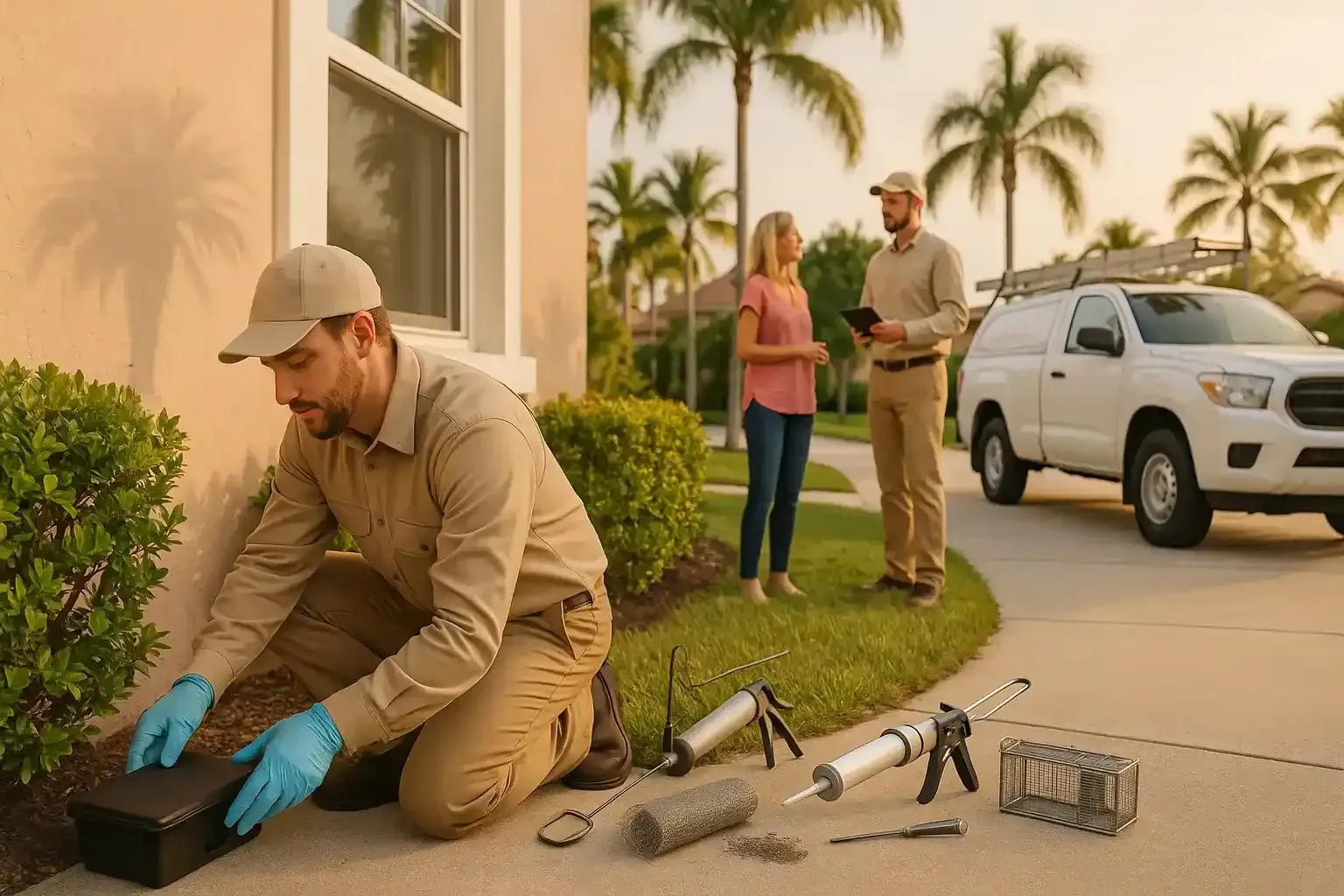
We start by listening—where you’ve noticed activity, what changed recently, and what you’ve tried. Then we inspect rooflines and foundations, soffits and vents, garages, attics, and the landscape perimeter. We map runways (droppings, rubs, gnaw marks), confirm species (roof rats vs. Norway rats vs. mice), and document every entry point. From there, we complete rodent exclusion: chew‑resistant screening on attic/gable vents, sealed pipe and conduit penetrations, repaired soffit/fascia, and door sweeps to eliminate light leaks at thresholds. With access closed, we place traps along natural routes to remove the current population quickly—and verify with follow‑ups that new rodents can’t replace them.
From the yard in: landscape choices that reduce pressure
Many Signs of Rats in Florida Homes begin outside—dense shrubs against siding, fruit drop beneath trees, soggy mulch along foundations, and leaf‑filled gutters that never quite dry. We connect indoor results to exterior resilience with services designed to dry the perimeter, reduce cover, and simplify monitoring. Lawn spraying helps manage turf pests and moisture patterns that keep slab edges wet. Our shrub tree care trims and lifts dense plantings so walls and eaves dry faster after storms. In shaded pockets, moss spraying improves light and air movement. Tree injections strengthen stressed trees from the inside out, reducing leaf drop and debris that create rodent cover. A healthier, drier perimeter supports stronger pest prevention across seasons.
Connected pests we solve under one plan
Where food, moisture, and harborage support rodents, other pests follow. If cockroaches are active in kitchens or valve boxes, we integrate targeted pest control: precise gel baits, insect growth regulators, and crack‑and‑crevice applications instead of broad indoor spraying. Excess perimeter moisture raises termite risk along slabs and piers; we’ll flag wood‑to‑soil contact, heavy mulch, and slab‑soaking irrigation, then tailor a termite strategy if needed. If travel ever introduces bed bugs—true hitchhikers with a different playbook—we design a specialized program that coordinates with your broader services. One plan, one team: pest control for cockroaches and household intruders, rodent exclusion for rats and mice, species‑matched termite strategies, and focused bed bug support—backed by exterior care through lawn spraying, shrub tree care, moss spraying, and tree injections.
Safety notes you can trust
Cleaning in rodent‑active areas should prioritize your health. Skip dry sweeping or vacuuming droppings and nest materials; the CDC’s wet cleaning steps reduce risk: CDC: Cleaning Up After Rodents. When contamination is heavy, we’ll advise on sanitization options and, if needed, safe removal and replacement of soiled insulation. For broader prevention basics, the CDC’s rodent page is a helpful reference during and after control: CDC: Prevent Rodent Infestations.
What to expect when you call on a Tuesday
We move quickly and methodically. Expect a calm walkthrough to confirm the Signs of Rats in Florida Homes you’ve noticed, followed by a full inspection of structure and perimeter. You’ll get a clear, step‑by‑step plan: rodent exclusion first (screening/sealing), strategic trapping along natural runways, and simple home and yard adjustments that amplify results. Most homes feel a big difference in one to two weeks; we verify that the current population is gone, then confirm the structure is sealed against the next wave.
Why homeowners choose Superior Spray
We’re Florida‑first and results‑focused. Our approach blends real rodent exclusion with targeted control and practical prevention that fits your routine. Because homes rarely face just one pest, we make it easy to connect services: pest control for cockroaches and other household intruders, rodent programs for rats and mice, termite inspections and species‑matched strategies, and specialized bed bug support. Outside, we strengthen the perimeter with lawn spraying, shrub tree care, moss spraying, and tree injections—so pests struggle before they ever reach your thresholds. And if you’ve been up late searching “pest contro” on your phone after a surprise sighting, we’ll make your next step simple and effective.
Make this Tuesday the day rats lose ground
When you link fast identification, true rodent exclusion, and smarter moisture and storage habits to targeted control, Signs of Rats in Florida Homes fade fast—and stay gone. At Superior Spray, we connect the dots from attic to foundation and from landscape edge to kitchen threshold, so your evenings get quieter and your home stays protected through the seasons. Whether you need urgent help or a year‑round pest prevention plan that also shields your home from cockroaches, rodents (rats and mice), and termites—and strengthens your landscape with lawn spraying, shrub tree care, moss spraying, and tree injections—we’ll tailor a solution that fits your property and budget.
If you’re exploring home health care options, let’s talk about what support looks like for your situation. Call 863-682-0700

Request Service
Request a Free Estimate
Fill out the form below. This form will take less than a minute to complete.
* indicates required fields