
Effective Termite Control Strategies for Florida Homes
Kevin Blanks • January 29, 2026
Termite Control in Florida: Signs, Prevention, and Proven Treatments That Protect Your Home
Termite Control in Florida isn’t a “maybe someday” task—it’s a right-now priority. Our warm, humid climate supports subterranean and drywood termites that can quietly damage structural wood, trim, and even furniture before you notice a thing. At Superior Spray, we combine science-backed inspection with precise treatments and year-round pest prevention to keep termites from turning small warning signs into expensive repairs. If you’ve seen wings on a windowsill, spotted a mud tube, or you’re just ready to get ahead of spring swarms, this guide to Termite Control in Florida explains what to watch for, what really works, and how we protect your home inside and out.
Why termites thrive here—and what that means for your home
Florida’s moisture, frequent rain, and dense landscapes create ideal conditions for subterranean termites, including the aggressive Formosan species. These termites need moisture and soil contact to build mud tubes and forage into structures. Drywood termites, on the other hand, don’t require soil contact—they colonize sound, dry wood and can establish multiple small colonies within a structure. Understanding which type you’re dealing with guides the right response. For a useful overview of termite identification and control methods, the EPA provides a homeowner-friendly resource: EPA: Termites—How to Identify and Control Them.
Termite Control in Florida starts with clear signs and fast action
Speed matters. Subterranean termites can work year-round, and seasonal swarms (often spring) are your cue to investigate. Drywood termite swarms typically occur later in the year and leave different clues behind. Florida’s Department of Agriculture and Consumer Services offers practical homeowner guidance you can bookmark: FDACS: Protect Your Home from Termites.
Common signs we look for during inspection include:
Subterranean termites: pencil-width mud tubes along foundations and piers; blistering or bubbling paint; hollow-sounding wood; and piles of wings near light sources after swarms.
Drywood termites: pepper-like frass (pellets) beneath kickout holes; faint rustling in infested wood; and swarmers (alates) appearing indoors around lights or windows.
If you can safely save a few specimens (wings or pellets) in a clear bag, do it—species identification informs the treatment plan. For species background specific to Florida, UF/IFAS offers deep dives on Formosan subterranean termites and drywood termites: UF/IFAS: Formosan Subterranean Termite and UF/IFAS: Drywood Termites.
What works—and what to avoid—when you suspect activity
It’s tempting to grab an aerosol, but broad interior spraying can scatter swarmers and contaminate areas we need to inspect. The most reliable Termite Control in Florida follows an Integrated Pest Management (IPM) approach: precise identification, moisture and habitat corrections, and targeted treatments matched to the species and structure. We often recommend holding off on DIY chemical applications until we inspect—so we can keep evidence intact, confirm species, and apply the right solution the first time.
Our treatment playbook for Termite Control in Florida
We tailor every termite strategy to your structure and species. Here’s how we think through options:
Subterranean termites: We deploy proven soil treatments or bait systems to eliminate colonies and cut off access at the source. Soil termiticides create treated zones that block or remove foraging termites; baiting programs intercept and eliminate colonies over time and are excellent for long-term monitoring. We correct conducive conditions—like chronic moisture, heavy mulch against the slab, or wood-to-soil contact—so we’re solving the problem and strengthening your property for the long run.
Drywood termites: Depending on activity level and access, we use localized injections into galleries, targeted wood treatments (including borate-based applications in appropriate areas), or we may recommend whole-structure fumigation for heavy, widespread infestations. We’ll explain pros and cons of each option, what to expect before and after treatment, and how to prevent re-infestation.
Post-treatment monitoring: Ongoing inspections and, when applicable, bait station checks confirm control and catch new pressure early. Florida is termite country—smart monitoring is part of strong pest prevention.
Moisture and maintenance: the foundation of prevention
Termites follow moisture and shelter. That’s why so much of Termite Control in Florida focuses on the details around your foundation and in hidden voids. We fix or flag issues such as leaking hose bibs, clogged gutters, misdirected downspouts, and irrigation that constantly soaks the slab. Indoors, we address sweating pipes and under-sink leaks, and we coach on ventilation that reduces humidity in baths and kitchens. Simple upgrades—door sweeps, sealed utility penetrations, and clean weep holes—also support rodent exclusion and help keep cockroaches from slipping inside.
From the yard in: landscape health reduces termite pressure
Your landscape can either invite or discourage termites. Dense, damp beds and constant shade along the foundation keep wood wet and accessible. We often align Termite Control in Florida with exterior care:
Lawn spraying: Targeted turf care can help manage moisture-related issues and pests that thrive along the slab edge, reducing debris and improving airflow.
Shrub tree care: Lifting and thinning plantings that touch siding or rooflines lowers shade and dampness where termites and other pests find shelter.
Moss spraying: In heavy, shaded zones, moss treatments can restore vigor and light, helping foliage dry faster after rain and irrigation.
Tree injections: By strengthening trees from the inside out, injections improve resilience against pests and diseases that create fallen wood and debris—materials termites love to exploit near the home.
We’ll also talk through mulch depth (keep it about 2 inches or less) and clearance (pull back a few inches from the foundation), firewood storage (off the ground and away from the house), and how to manage storm debris quickly so it doesn’t become long-term termite food.
Connected pests and services under one roof
Termites don’t live in a vacuum. The same excess moisture and shelter that draw termites can encourage cockroaches and provide pathways for rodents—rats and mice—along rooflines and foundations. When we’re on-site for termite work, we keep an eye out for related risks and integrate solutions where it makes sense: targeted pest control for roaches, rodent exclusion to seal gnaw points, and clear steps for lifestyle and structural tweaks that simplify long-term pest prevention. If bed bugs ever become a concern (usually via travel), we handle that with a specialized plan that doesn’t conflict with your termite strategy.
Our inspection process: calm, thorough, and science-led
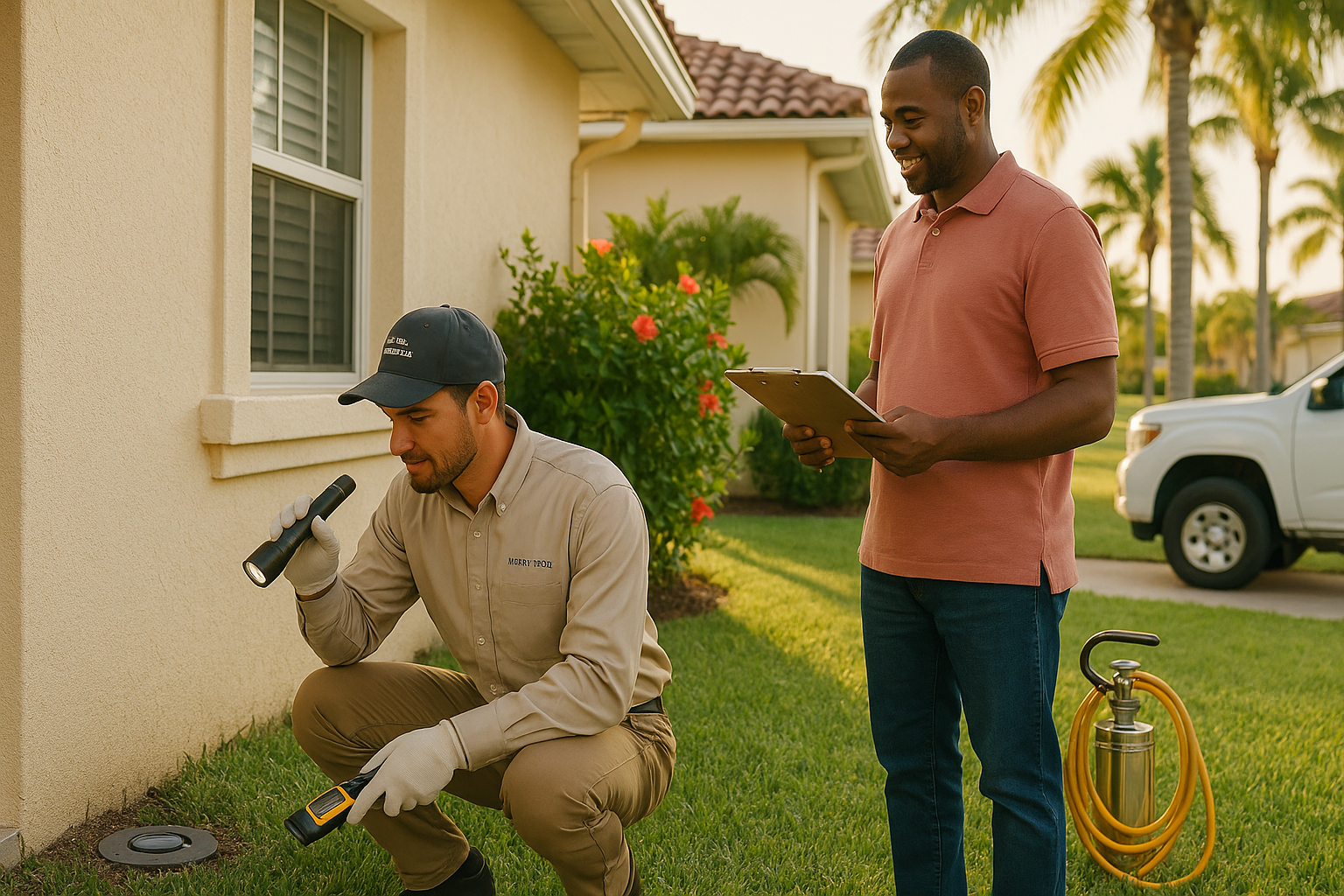
We start with listening—where you’ve seen activity, what changed recently (new irrigation, storm damage, construction nearby), and any prior treatments. Then we inspect the structure and perimeter, checking foundations, crawlspaces, attics, and any wood-to-soil contacts. We document findings with photos, explain which species is present (or likely), and outline a step-by-step plan that fits your home and budget. You’ll know what we’re doing, why we’re doing it, and what results to expect at each stage of Termite Control in Florida.
Your Thursday termite checklist: fast, effective first steps
- Collect evidence, don’t scatter it: Save wings or frass in a clear bag; avoid aerosols or heavy cleaning in suspect areas until we inspect.
- Cut down moisture: Tighten hose bibs, clear gutters, redirect downspouts away from the foundation, and repair slow leaks under sinks.
- Reduce wood-to-soil contact: Pull mulch back a few inches from the slab; lift stored lumber and firewood off the ground and away from the structure.
- Improve airflow: Trim shrubs touching siding, thin dense plantings at corners, and check that vents and weep holes are unobstructed.
- Note activity zones: Jot down where you saw wings, mud tubes, or pellets and when you noticed them—it speeds up diagnosis.
- Call Superior Spray: We’ll confirm species and tailor soil treatments, baiting, wood applications, or fumigation recommendations based on what we find.
What to expect during and after treatment
We sequence work to eliminate colonies, protect the structure, and minimize disruption to your routine. For soil or bait applications, you can expect a clean, methodical process around the exterior with minimal impact on landscaping. For drywood treatments, we’ll explain localized vs. whole-structure options and preparation details. After service, we schedule follow-ups to verify control and ensure your home stays protected as seasons change. If you’ve been up late searching “pest contro” after finding wings on the floor, you’re not alone—we’ll make your next step simple and effective.
Why choose Superior Spray
We’re Florida-first and laser-focused on lasting results. Our team pairs advanced identification and inspection with proven treatments and year-round monitoring to keep pressure down and your structure protected. And because homes rarely face just one threat, we streamline support across services: termite strategies, targeted pest control for cockroaches, rodent exclusion for rats and mice, and specialized programs for bed bugs. Outside, we connect landscape health to pest prevention with lawn spraying, shrub tree care, moss spraying, and tree injections—one plan, one team, fewer surprises.
Make this Thursday the day termites lose ground
A few smart moves today—moisture fixes, better airflow, and a precise treatment plan—can protect your home for years. At Superior Spray, we bring practical expertise to Termite Control in Florida so you can move from worry to confidence, fast. If you’re seeing signs or just want peace of mind before swarming season, we’re ready with a tailored plan that fits your property and budget.
If you’re exploring home health care options, let’s talk about what support looks like for your situation. Call 863-682-0700
Request Service
Request a Free Estimate
Fill out the form below. This form will take less than a minute to complete.
* indicates required fields